
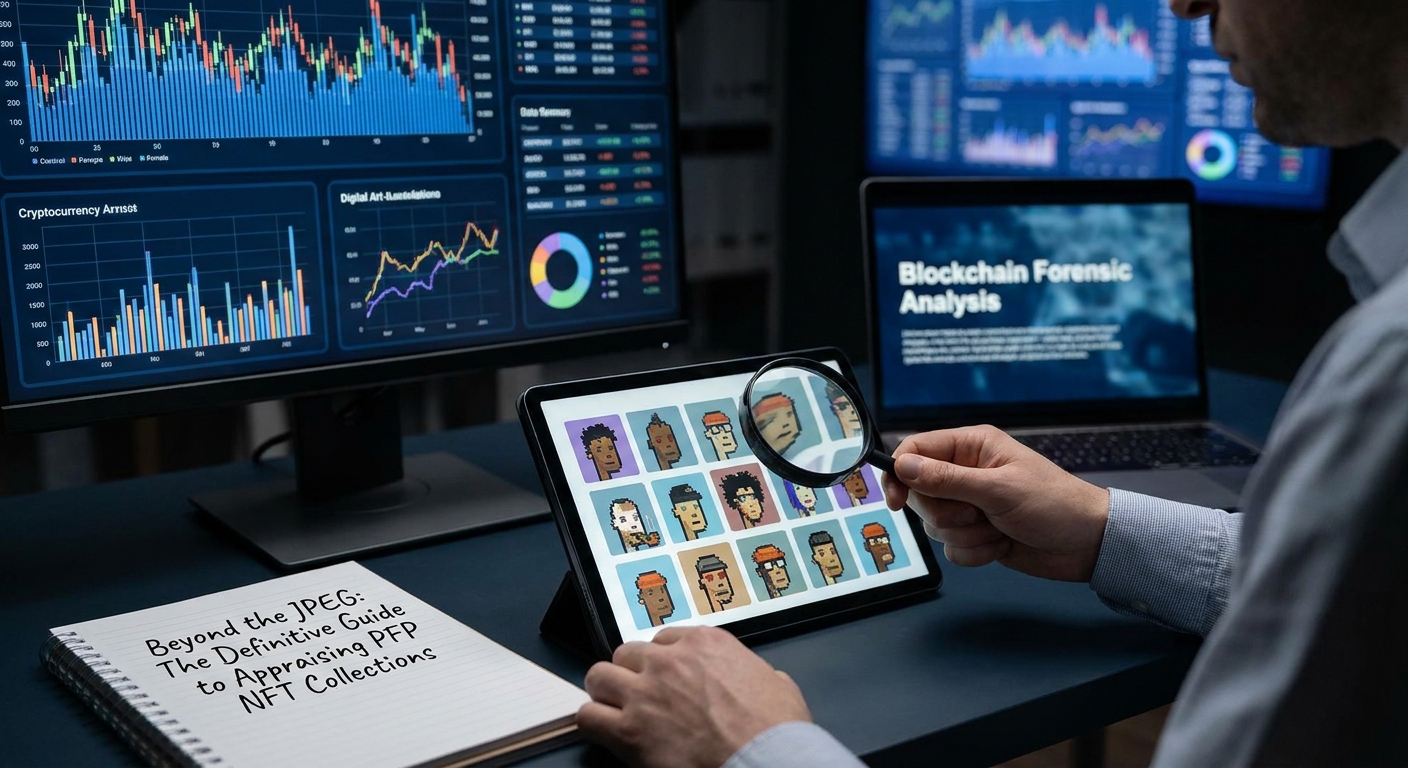
When Julian’s estate was finally inventoried, the legal team found more than just property deeds and stock certificates. Tucked away in a cold storage wallet was a collection of forty-two high-profile NFTs acquired during the 2021 market surge. To the executors, these looked like little more than cartoon animals of questionable aesthetic value. To the heirs, however, they represented a potential seven-figure windfall. The market had shifted significantly since the initial purchase, and the "floor price" listed on public marketplaces only told a fraction of the story. One specific piece featured a rare gold skin that hadn’t seen a public sale in nearly two years, leaving the legal team at a standstill: how do you put a defensible dollar amount on an asset that is both illiquid and highly speculative?
Appraising a PFP (Profile Picture) collection requires moving far beyond the surface-level data of a gallery view. You cannot simply look at the lowest price on a marketplace and multiply it by the number of assets in a portfolio. That would be like valuing a fleet of vintage Ferraris based on the price of a rusted-out shell found in a scrap yard. To reach a professional valuation, we must treat these digital assets with the same forensic rigor we apply to traditional financial instruments, looking at the plumbing of the blockchain rather than just the art on the screen.
The first strategy for a reliable appraisal is Wallet Clustering and Holder Distribution Analysis. A healthy collection is decentralized, meaning the power to move the price is spread across many hands. You should use blockchain analysis software to identify if a small group of "whales" controls a disproportionate amount of the supply. If four individuals own 30% of a 10,000-piece collection, the value is fragile; a single liquidation event could collapse the floor price. Conversely, a high "Unique Holder Ratio"—ideally above 50%—suggests a robust community capable of absorbing sell pressure. When advising a client, look for "diamond hand" behavior: wallets that have held the asset for over a year through significant price volatility. This indicates a baseline of value that is less likely to evaporate overnight.
The second strategy involves calculating the Liquidity-Adjusted Trait Premium. Rarity is often conflated with value, but in a professional appraisal, rarity without demand is merely a statistic. You must look at the specific transaction history of individual traits. For instance, if a PFP has a "laser eyes" trait that occurs in only 0.5% of the collection, it is objectively rare. However, if the last three sales for that trait occurred six months ago at wildly different price points, the "premium" is illiquid. An appraiser must apply a liquidity discount to rare traits that haven't moved recently. A piece is only worth what a buyer is willing to pay today, not what a rarity calculator says it "should" be worth based on its metadata.
In the world of digital collectibles, we often lean on the Lindy Effect as a guiding framework. This concept suggests that the future life expectancy of a non-perishable thing—like a brand or a piece of software—is proportional to its current age. A PFP collection that has maintained its status as a "blue chip" through two full market cycles is statistically more likely to retain value than a "hype" project launched three months ago. When appraising, you should weight the "provenance" and the age of the smart contract heavily. Older, established contracts act as a flight-to-quality destination during market downturns.
Consider a recent case handled by an analyst named Beatrice. She was tasked with valuing a mid-tier PFP collection for a complicated business dissolution. The public floor price was 4.2 ETH, but something felt off. Using her blockchain data tools, Beatrice mapped the transaction history of the highest-priced sales in the collection. She discovered a "circular trading" pattern: Wallet A sold to Wallet B, which sold to Wallet C, and eventually, the funds were routed back to Wallet A through a privacy protocol. The record-breaking sales were artificial—wash trading designed to inflate the perceived value of the rare traits. By stripping away these synthetic transactions, Beatrice established a true market value of 1.5 ETH, providing her client with a valuation that could actually withstand the scrutiny of a courtroom.
The shift from guessing to appraising happens the moment you stop looking at the JPEG and start looking at the ledger. Data doesn't lie, but it can be obscured by market noise and intentional manipulation. For anyone needing an accurate appraisal, the takeaway is clear: demand a Multi-Vector Analysis. This must include unique holder ratios, wash-trading filters, and trait-specific liquidity discounts. Do not settle for a screenshot of a marketplace floor price; insist on a valuation backed by granular, on-chain transaction data that accounts for both the community's health and the reality of the market's exit liquidity.