
The sudden silence in Elias’s apartment felt heavier than usual. His sister, Marla, stared at the blank screen of his laptop, a knot of dread tightening in her stomach. Elias, a brilliant but intensely private software engineer, had passed away unexpectedly, leaving behind a digital labyrinth. Friends knew he’d been an early adopter of various cryptocurrencies, often boasting about his decentralized finance (DeFi) ventures. But now, with Elias gone, Marla had no idea how to access anything. There were no physical ledgers, no clear instructions, just a cryptic note about a "seed phrase" hidden "somewhere safe." Days turned into weeks, then months, as Marla navigated a confusing world of unfamiliar terms, impenetrable security, and the agonizing realization that hundreds of thousands, potentially millions, in digital assets might be forever out of reach. His careful financial planning for his family, meticulously laid out in traditional wills and trusts, was utterly useless for his most significant holdings.
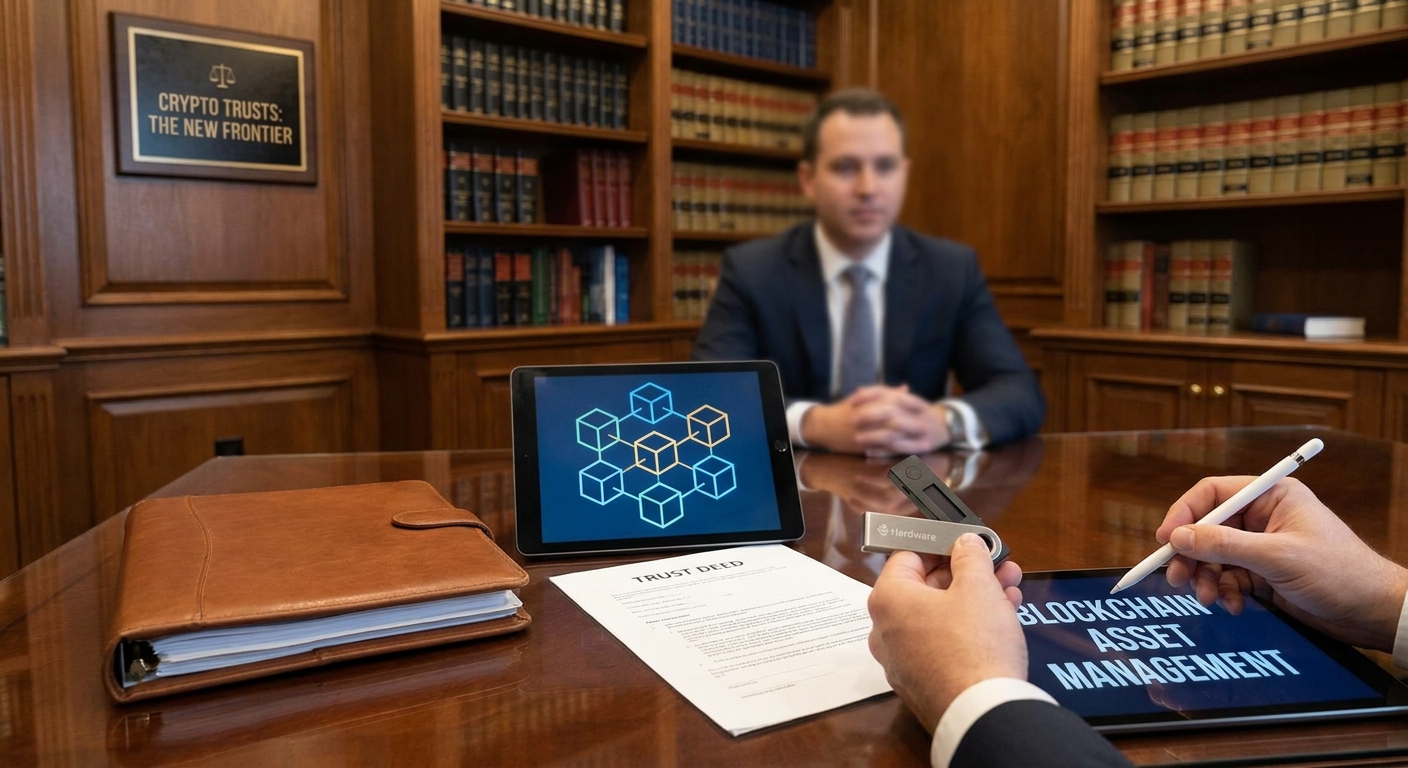
Elias’s predicament, tragically common, underscores a critical blind spot in modern estate planning. Traditional wills and trusts, designed for tangible assets or easily transferable financial accounts, simply aren't equipped to handle the unique characteristics of cryptocurrencies and other digital assets. These assets exist on decentralized ledgers, secured by private keys, and are often held in non-custodial wallets where the user is their own bank. Without careful foresight, these digital fortunes can become permanently inaccessible, creating immense financial and emotional distress for beneficiaries. This is where crypto trusts emerge as the new frontier, offering a robust, legally sound framework to bridge the gap between traditional estate planning and the complexities of the blockchain.
One effective strategy involves leveraging multi-signature (multi-sig) wallets within a trust structure. A multi-sig wallet requires multiple private keys to authorize a transaction, rather than just one. In an estate context, this can be incredibly powerful. Imagine a trust where the digital assets are held in a multi-sig wallet. The private keys could be distributed among several trusted parties: perhaps a primary beneficiary, a designated attorney, and an independent professional trustee. For example, Dr. Ben Carter, a crypto wealth advisor, might advise a client, Ms. Anya Sharma, to set up a multi-sig wallet requiring 3 out of 5 keys for transactions. Ms. Sharma would hold one key, her chosen executor another, and three additional keys could be held by a trusted law firm, an accounting firm, and a secure institutional custodian. This eliminates a single point of failure and ensures that even if one key is lost or one party becomes incapacitated, the assets remain accessible and can be managed according to the trust’s directives. This setup not only enhances security during the grantor's lifetime but also provides a clear, controlled mechanism for asset transfer upon their passing or incapacitation.
Another vital strategy involves establishing an irrevocable trust with specific digital asset provisions. While revocable trusts offer flexibility, irrevocable trusts often provide greater asset protection and tax advantages, which can be particularly beneficial for highly volatile and potentially high-value crypto assets. The key is to draft the trust instrument with explicit clauses detailing how digital assets are to be identified, managed, valued, and distributed. For instance, the trust document would not just state "my digital assets" but would specify the types of cryptocurrencies, NFTs, or DeFi positions involved, the wallet addresses (if appropriate to disclose), and the exact protocols for accessing them (e.g., "the executor shall retrieve the hardware wallet stored in safe deposit box #123 and follow the enclosed instructions to access the multi-sig wallet maintained by ABC Custody"). It would also outline the trustee's responsibilities, such as monitoring market conditions, engaging professional valuation services, or even staking assets for yield generation, all within predefined risk parameters. This level of detail minimizes ambiguity and empowers the trustee with clear directives, preventing costly legal disputes and ensuring the grantor's wishes are precisely followed.
Finally, integrating specialized digital asset custodians or secure software solutions into the trust framework offers a layer of professional management and security. While some individuals prefer to self-custody their assets, for estate planning purposes, relying solely on personal knowledge and security practices can be risky. Modern solutions include institutional-grade custodians that hold private keys on behalf of the trust, often with cold storage and robust insurance policies. Alternatively, secure digital inheritance platforms provide encrypted vaults for storing seed phrases, private keys, and instructions, often with time-locked release mechanisms or multi-party access protocols that align with trust provisions. For example, Mr. Julian Vance, a retired entrepreneur, set up a trust that designated a specialized digital asset custodian to hold his Bitcoin and Ethereum. His trust agreement stipulated that upon his death, the custodian would verify the death certificate and the trustee's identity, then release the assets to a new multi-sig wallet controlled by the beneficiaries and the trustee, as per the trust’s instructions. This approach offloads the immense responsibility of securing private keys from individual beneficiaries and places it in the hands of entities built specifically for this purpose.
At the heart of effective crypto trust design lies the principle of "defense in depth," an evidence-based concept from cybersecurity. Just as multiple layers of security are applied to protect sensitive data, crypto trusts employ multiple layers of legal, technical, and procedural safeguards. This means not relying on a single solution—a will, a password manager, or a single trusted person—but combining legal structures (the trust), technical solutions (multi-sig, secure custody), and clear procedural instructions to create a resilient framework. Each layer acts as a fallback, ensuring that even if one component fails, the overall system remains secure and accessible.
Consider Dr. Evelyn Reed, a successful ophthalmologist who diversified early into various altcoins and NFTs. Recognizing the unique challenges, she proactively worked with an estate planning attorney specializing in digital assets. Her irrevocable trust stipulated that her substantial crypto portfolio, held across several hardware wallets and a DeFi staking platform, would be managed by a professional trustee. The trustee was given specific instructions for accessing the assets via a securely stored master seed phrase, which was itself fragmented and held by three independent parties. Upon Dr. Reed’s passing, her niece, Chloe, the primary beneficiary, received regular distributions from the trust, with the digital assets professionally managed and strategically liquidated over time to minimize market impact and tax liabilities. Dr. Reed’s foresight meant Chloe inherited not a technological headache, but a well-managed financial legacy.
The rapid evolution of blockchain technology means that crypto trusts are not static instruments. They require periodic review and potential amendment to account for new asset classes, regulatory changes, and evolving security best practices. For anyone holding significant digital assets, the time to act is now. Proactive planning can mean the difference between leaving a robust, accessible legacy and an insurmountable digital puzzle. Securing your digital estate requires more than just a traditional will; it demands a specialized crypto trust. For individuals needing to understand the true value and implications of their digital assets for estate planning, engaging with professionals who can accurately appraise these complex holdings and integrate them into a comprehensive, legally sound trust structure is not merely advisable—it is absolutely essential.