
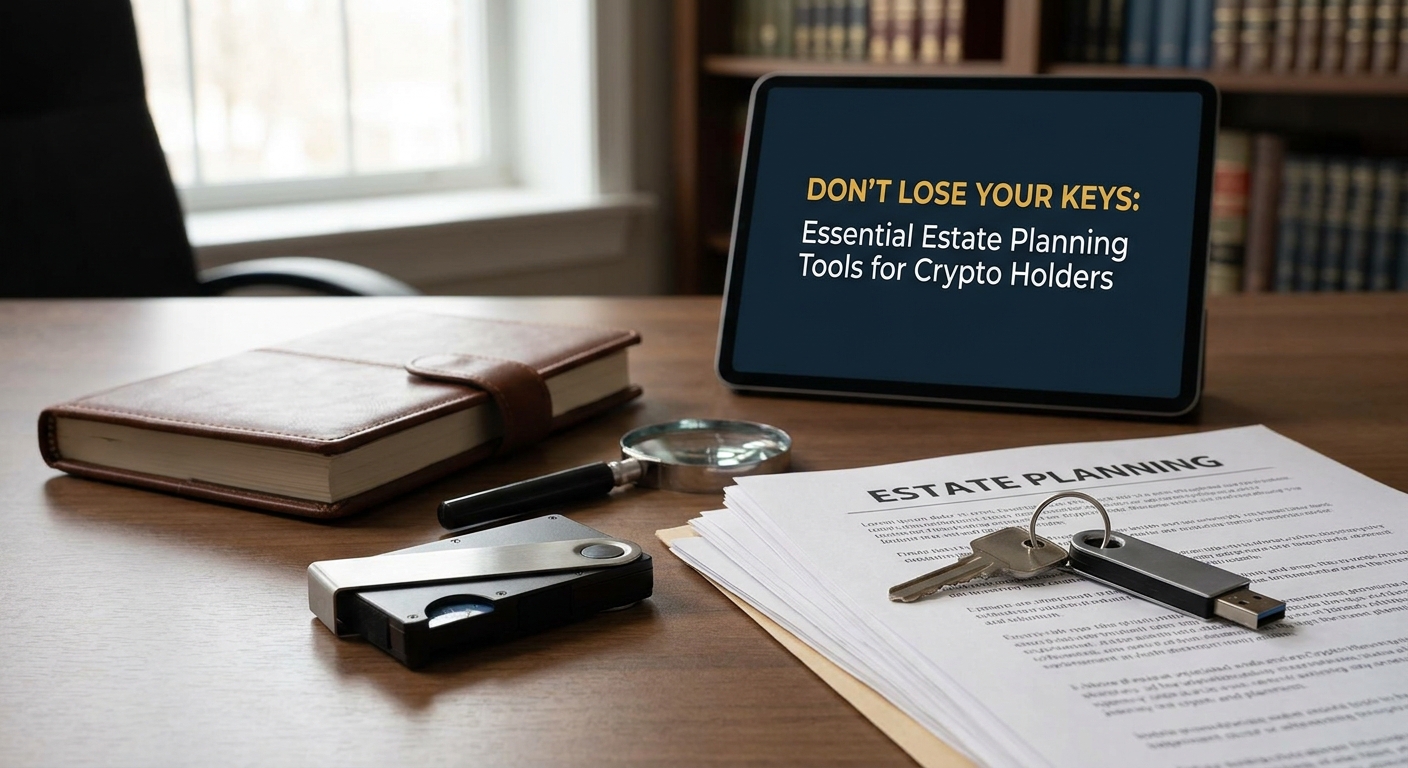
The call came in late one evening, a voice heavy with grief and confusion. It was David, the son of a prominent early tech adopter named Eleanor. Eleanor had been a visionary, investing in Bitcoin back when it was an obscure curiosity, and accumulating a diverse portfolio of digital assets over the years. She was fiercely independent and meticulous in her financial affairs, yet her digital wealth remained a closely guarded secret. Following her unexpected passing, David and his sister, Emily, began the daunting task of settling her estate.
They knew Eleanor had substantial cryptocurrency holdings; she’d mentioned it vaguely, even proudly, a few times. They found old exchange account statements, tantalizing transaction histories, and even a cryptic note referencing a "seed phrase" and "hardware wallet." The problem? The hardware wallet was nowhere to be found, and the seed phrase, the master key to everything, was a series of words known only to Eleanor. Despite their exhaustive search through her meticulously organized papers, her digital files, and even old journals, the crucial piece of information remained elusive. The assets, potentially worth millions, were effectively lost—a digital ghost in the machine, visible on the blockchain but entirely inaccessible to her rightful heirs. This isn't an isolated incident; it's a tragically common scenario that highlights a critical oversight in modern estate planning.
As a forensic blockchain and cryptocurrency expert, I’ve witnessed firsthand the devastation and frustration caused by inadequate planning for digital assets. The decentralized, self-custodial nature of cryptocurrency, while a core strength, also presents unique challenges for inheritance. Unlike traditional bank accounts or stock portfolios, there's no central authority to contact, no "forgot password" button, and often no legal recourse if the private keys are truly lost. Ensuring your digital legacy can be passed on requires foresight and specific strategies.
One of the most robust and increasingly popular solutions is the multi-signature (multi-sig) wallet. Imagine a traditional safe deposit box that requires two keys to open instead of one. A multi-sig wallet operates on a similar principle: it requires a predetermined number of private keys (signatures) out of a total set to authorize a transaction. For example, you might set up a 2-of-3 multi-sig wallet, where you hold one key, a trusted family member (like your spouse or adult child) holds another, and your estate lawyer or a reputable digital asset custodian holds the third. In this scenario, no single person can unilaterally access or move the funds. If you become incapacitated or pass away, the remaining two key holders can, with proper documentation and legal authorization, access and manage the assets. This provides a critical layer of security against both theft and unforeseen circumstances, distributing trust without centralizing it. The key is to ensure each key holder understands their role and the process for activation, ideally with clear instructions in your will or a separate digital asset specific trust.
Beyond multi-sig setups, specialized crypto inheritance solutions are emerging, often leveraging smart contracts for automated, time-locked releases or secure escrow services. These platforms are designed to address the unique challenges of digital asset transfer. They typically involve a "dead man's switch" mechanism, where if certain conditions are met (e.g., no activity from your wallet for a specified period, or notification of your passing by a trusted third party), access to your keys or assets is automatically granted to your designated beneficiaries. When considering such a service, due diligence is paramount. Research the provider's security protocols, their track record, regulatory compliance, and the clarity of their legal frameworks. Ensure their solution aligns with your specific needs and risk tolerance. These services often involve a delicate balance of automation and human verification, aiming to prevent premature access while guaranteeing eventual transfer.
Finally, and perhaps most fundamentally, is the strategy of secure, decentralized key management and documentation. This isn't about fancy tech but about meticulous planning. Your seed phrases, private keys, and critical login information must be stored in a way that is both incredibly secure and accessible to your chosen fiduciaries upon your death or incapacitation. Consider an encrypted USB drive stored in a physical safe deposit box, with the decryption key held separately by a trusted individual or your estate lawyer, perhaps in a sealed envelope only to be opened under specific circumstances outlined in your will. Another method involves splitting your seed phrase into multiple parts and distributing them among several trusted individuals, each holding a fragment insufficient to reconstruct the whole on their own. This employs the "Shamir's Secret Sharing" principle, where a certain threshold of fragments is needed to reveal the secret. The "Defense in Depth" framework, a concept borrowed from cybersecurity, is highly relevant here: create multiple layers of security and access protocols. Don't rely on a single point of failure. Document everything clearly—wallet types, exchange accounts, usernames, and the precise location of your keys—but do so in a way that doesn't compromise security if the document falls into the wrong hands.
In practice, this might look like Maria, a long-time crypto investor. She created a comprehensive digital asset inventory, detailing her various wallets and exchange accounts. For her most significant holdings, she used a 2-of-3 multi-sig wallet. She held one key, her husband held another, and her estate lawyer held a third in an encrypted file accessible only after her death, with specific instructions in her will. For her smaller holdings, she used a hardware wallet, storing its seed phrase in a fireproof safe, with a copy of the encrypted seed phrase provided to her husband, along with the password, in a sealed, tamper-evident envelope. She reviewed this plan annually with her family and lawyer, ensuring everyone understood their roles. When she decided to gift some crypto to her niece, the process was straightforward, demonstrating the practical utility of her proactive planning.
The digital revolution has brought unprecedented opportunities for wealth creation, but it also demands a new approach to estate planning. Losing your keys, whether through negligence, accident, or death, means losing your assets. For those looking to understand the true value of their digital assets—whether for current financial planning, tax purposes, or indeed, for estate planning—the first and most critical step is ensuring those assets are accessible and properly accounted for. An appraisal of inaccessible assets is a theoretical exercise; true value lies in control and documented, secure ownership. Don't let your digital legacy become a digital ghost. Act now to secure your keys and, by extension, your family's future.