
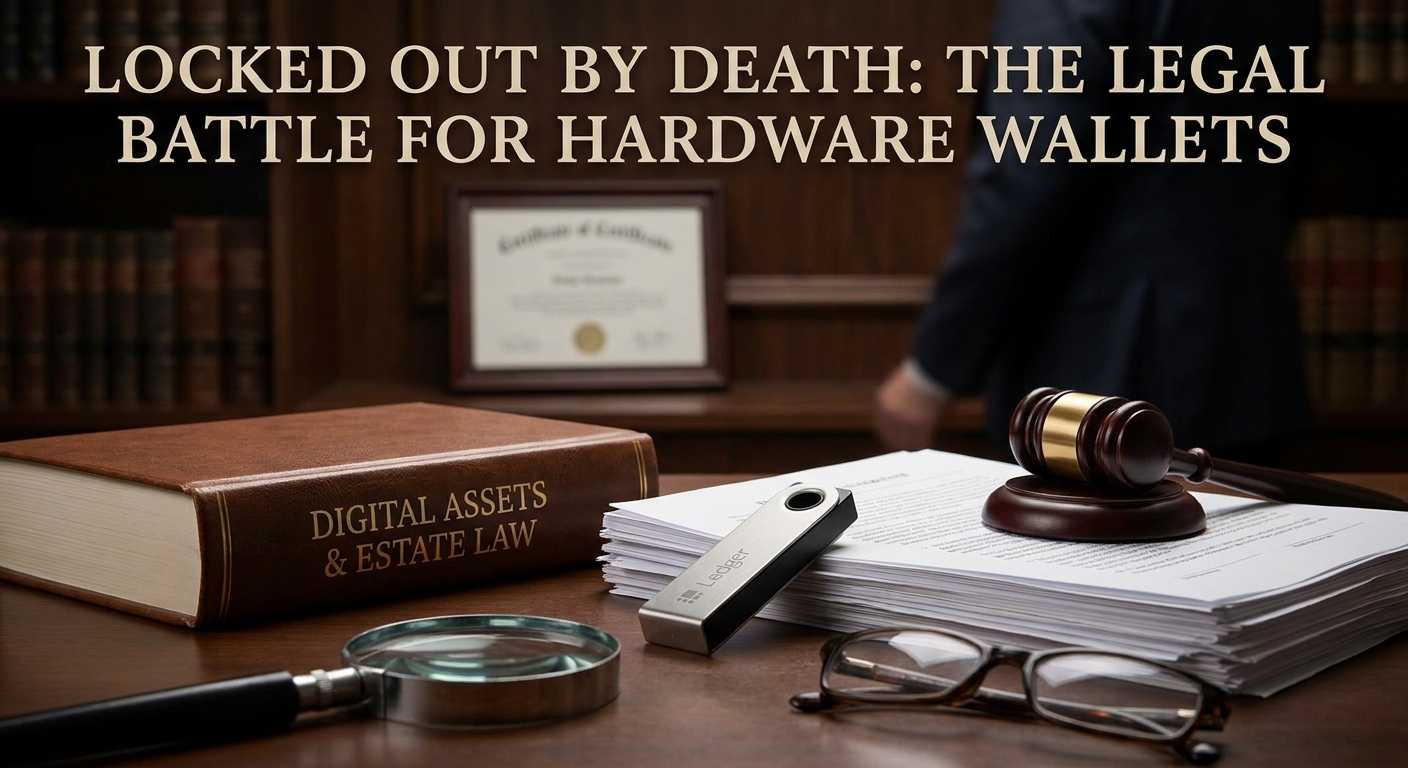
The news of Arthur’s sudden passing hit his family hard. Beyond the grief, there was the inevitable task of settling his affairs. Arthur, a brilliant but notoriously private software engineer, had always hinted at significant cryptocurrency holdings. His children, Liam and Maya, knew he was an early adopter, but when the estate lawyer asked about digital assets, they were at a loss. They found a small, sleek device resembling a fancy USB stick in his safe – a hardware wallet, along with a jumbled notepad containing what looked like random words and numbers. There was no clear password, no instructions, just a looming question: how do you access potentially millions of dollars locked away by a deceased loved one? This isn't a hypothetical; it's a scenario playing out with increasing frequency in probate courts and family offices worldwide.
The security of hardware wallets, designed to protect digital assets from online threats, becomes their greatest vulnerability when their owner passes away without proper planning. These devices store private keys offline, making them incredibly resistant to hacking. However, this robust security also means that without the corresponding seed phrase (a series of 12 or 24 words) or a strong password, the assets are effectively inaccessible, even to rightful heirs. The legal landscape surrounding digital assets is still nascent, often struggling to keep pace with technological advancements. Traditional wills and estate plans rarely account for the unique challenges of cryptocurrency, leaving families in a frustrating and often expensive battle against an unyielding digital fortress.
Navigating this complex intersection of technology, law, and personal tragedy requires a multi-faceted approach. One of the most effective strategies, albeit one that requires foresight, is proactive digital estate planning. This involves more than just listing digital assets in a will. It demands a detailed inventory of all cryptocurrency holdings, including the type of hardware wallet used, any associated exchange accounts, and, crucially, the secure storage of seed phrases and passwords. A common method is to create an encrypted document with all necessary access details, stored in a secure location (e.g., a bank vault or a specialized digital inheritance service), with instructions on how to decrypt it for a designated "digital executor." Some individuals opt for multi-signature wallets, where several trusted parties must approve a transaction, providing a layer of security and redundancy in case one key holder is unavailable.
When proactive planning hasn't occurred, the next step often involves forensic recovery and blockchain analysis. This is where specialized expertise becomes indispensable. Forensic blockchain experts can meticulously examine a deceased individual's digital footprint – old computers, cloud storage, email accounts, and even physical notes – for any fragments of information that might lead to a seed phrase or password. This isn't about "hacking" the wallet, but rather about piecing together clues. We might analyze transaction histories on public blockchains (using advanced software) to identify specific wallet addresses the deceased owned, which can then guide the search for corresponding private keys. For instance, finding an old email confirming a transfer to a specific hardware wallet address can narrow the focus of the investigation significantly. It's a painstaking process of digital archaeology, often requiring an understanding of common user behaviors and security practices to uncover forgotten hints.
A third strategy often involves legal intervention and court orders. In some cases, if there's evidence that the deceased held assets on a centralized exchange (like Coinbase or Binance), a court order can compel the exchange to disclose information or even transfer assets to the estate, provided proper identification and legal authority are established. However, this is largely ineffective for assets held on self-custodied hardware wallets, as exchanges have no control over those private keys. Court orders might also be sought to gain access to other digital accounts (like email or cloud storage) that could contain critical clues, although privacy concerns and service provider policies can make this challenging. The legal framework is still evolving, with some jurisdictions beginning to recognize digital assets as part of an estate, but enforcement for truly self-custodied assets remains a significant hurdle.
At the heart of any successful recovery effort is the concept of "Proof of Intent and Ownership." Simply finding a hardware wallet isn't enough; the estate must legally demonstrate that the deceased owned the assets within it and intended for them to be part of their estate. This often involves corroborating evidence from multiple sources: the will, financial records, digital communications, and the physical presence of the wallet itself. For example, if Arthur's notepad contained a partial seed phrase and his bank statements showed large transfers to a cryptocurrency exchange around the same time he purchased the hardware wallet, this combined evidence strengthens the claim of ownership and intent.
In practice, a client recently approached us regarding the estate of Ms. Sophia Chen. She was a meticulous planner for traditional assets but had only vaguely mentioned her substantial Bitcoin holdings to her family. They found a Ledger device but no seed phrase. Through careful analysis of her personal computer, an expert team uncovered a heavily encrypted file containing what appeared to be a 24-word seed phrase. The password to this file was found in a seemingly unrelated note in her physical journal, disguised as a recipe ingredient list. It was a complex puzzle, but by cross-referencing digital and physical clues, the team was able to access her significant holdings, turning a potential loss into a substantial inheritance.
The tragic reality of "locked out by death" underscores a critical takeaway: proactive digital estate planning is no longer optional; it's an absolute necessity. For those who find themselves in the unenviable position of needing to access a deceased loved one's hardware wallet, time is often of the essence. Engaging forensic blockchain experts early can significantly improve the chances of recovery and accurate appraisal of these assets for probate. Their specialized knowledge, combined with advanced analytical software, can uncover the elusive keys to digital wealth, ensuring that a legacy is not lost to the complexities of the blockchain.