
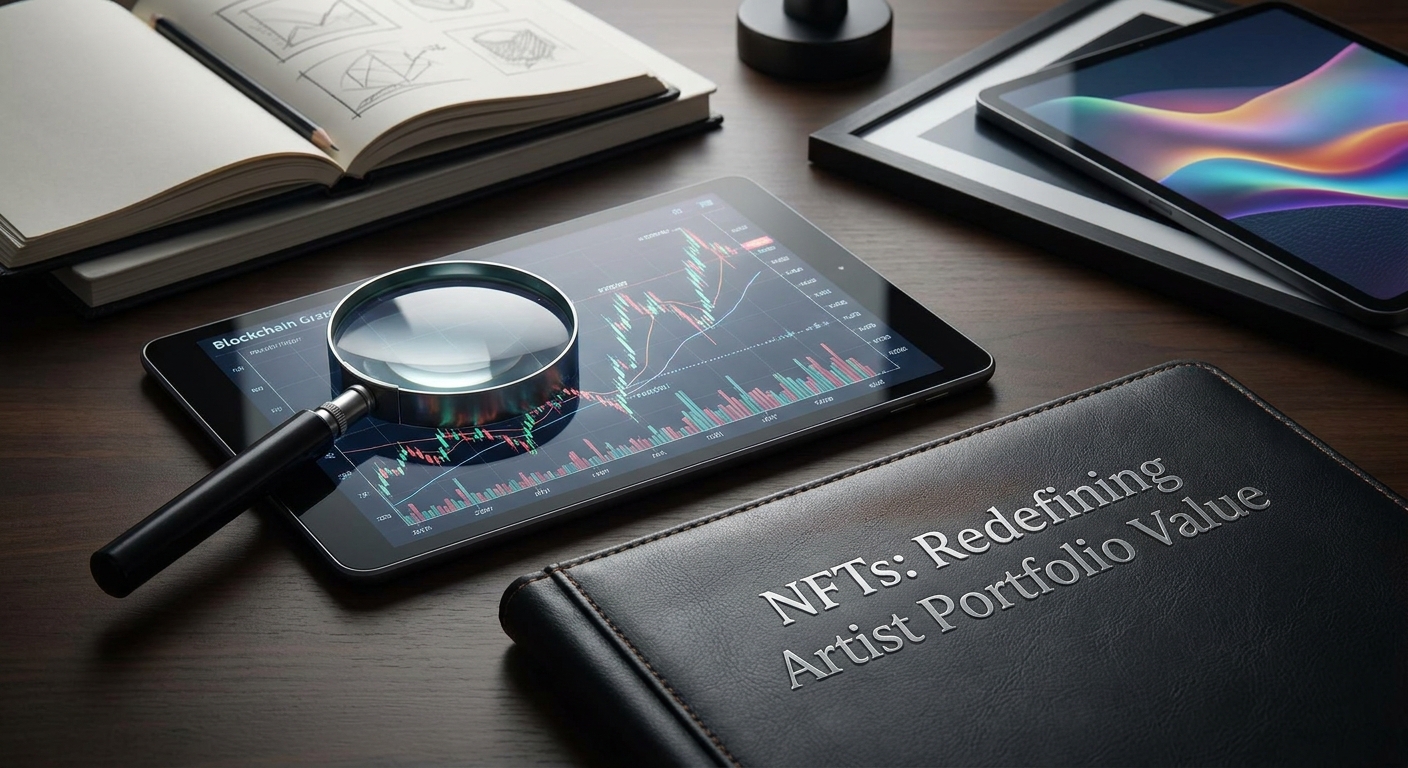
Clara, a digital artist from Portland, had always found traditional art markets daunting. Her vibrant, algorithmically generated landscapes, while admired online, rarely translated into significant income beyond a few hundred dollars for limited edition prints. Then came NFTs. She minted "Echoes of Solitude," a piece she'd spent months perfecting, on a whim. It sold for 0.5 ETH, then resold a week later for 1.2 ETH, and within a month, a prominent collector, Eleanor, acquired it for 5 ETH. Suddenly, Clara's entire digital portfolio, once seen as a collection of pretty JPEGs, held tangible, verifiable value. But for Eleanor, the new owner, this surge presented a fresh challenge: how to accurately appraise an asset whose value seemed to defy conventional metrics, especially for insurance or estate planning purposes. This scenario, once rare, is now commonplace, underscoring how NFTs are fundamentally redefining the value proposition of artistic portfolios.
The advent of Non-Fungible Tokens has ushered in a paradigm shift, transforming how artists create, distribute, and monetize their work, and critically, how their creations are valued. No longer are digital assets ephemeral or infinitely replicable; NFTs imbue them with provable scarcity, unique ownership, and an immutable transaction history. This creates an entirely new landscape for portfolio valuation, one that demands a blend of traditional appraisal principles and a deep understanding of blockchain forensics. As experts in navigating the intricate data of digital assets, our perspective is that the true value of an NFT-backed artwork isn’t just in its aesthetic appeal, but in its verifiable, on-chain journey.
One of the most crucial strategies for assessing NFT portfolio value lies in meticulously tracing on-chain provenance and transaction history. Unlike physical art, where provenance can be fragmented or even fabricated, an NFT's lifecycle is etched onto a public, immutable ledger. This means every minting event, every transfer, and every sale price is transparently recorded. To effectively value an NFT, one must trace its journey from its initial creation by the artist's wallet, through every subsequent owner and sale, noting the timestamps, the specific platforms used (e.g., OpenSea, Foundation, SuperRare), and the cryptocurrency involved. For instance, if David purchased a piece for 2 ETH, and it was subsequently resold for 5 ETH, then 10 ETH over two years, this verifiable chain of transactions provides a robust foundation for establishing market activity and demand, far more reliable than anecdotal evidence or artist statements alone. This data forms the bedrock for understanding an asset's historical performance and current perceived worth.
Secondly, analyzing the broader market dynamics and ecosystem factors is indispensable. An NFT's value is rarely isolated to the artwork itself; it's intricately linked to the artist's brand, the community surrounding their work, and the overall health of the NFT market. We look beyond the individual transaction to assess the artist's social media presence and engagement, their collaborations, and the "floor price" of their other works or pieces within the same collection. Is the artist consistently selling out new drops? Are there active discussions in their Discord channels? Is the collector base growing and reputable? For example, if an artist like Jasper has cultivated a strong following on Twitter, regularly engages with their community, and has a track record of successful projects, their NFTs will likely command a higher premium due to the established brand equity and perceived future potential. Conversely, a lack of community engagement or declining floor prices for an artist's other works could indicate waning interest, impacting valuation.
An evidence-based concept highly relevant here is the Comparable Sales Approach, adapted for the digital realm. In traditional appraisals, this involves finding recent sales of similar properties. For NFTs, while finding truly "identical" comparables is challenging due to their unique nature, the principle still holds. We look for NFTs by the same artist, within the same collection, or by artists with similar styles and market standing, sold on comparable platforms within a relevant timeframe. The key distinction is the reliance on on-chain data and metadata to define comparability, rather than subjective artistic assessment alone. This means scrutinizing smart contract attributes, token standards, and utility features to find the closest possible matches.
Finally, assessing the utility and future potential of an NFT adds another layer to its valuation. Many NFTs are more than just digital art; they are keys to exclusive communities, grant access to events, confer voting rights in DAOs, or promise future airdrops and metaverse integration. For instance, an NFT that provides lifetime access to a private online forum where the artist shares exclusive content, or one that functions as a character in an upcoming blockchain game, holds an intrinsic utility value beyond its aesthetic or speculative market price. This utility can significantly bolster long-term demand and, consequently, its appraised value. When David's "Pixel Bloom" NFT not only served as a striking visual but also granted him early access to the artist's next major project, its perceived value grew exponentially among collectors seeking that exclusive access.
In practice vignette: When Olivia, an estate planner, encountered a unique NFT called "Crypto Bloom" by an artist named Jasper in a client's will, she initially had no frame of reference. The client had bought it for 1 ETH two years prior. By tracing its on-chain history using specialized software, Olivia discovered it had been resold twice, most recently for 8 ETH. Further analysis revealed that Jasper's other works were commanding significant floor prices due to a recent collaboration with a major fashion brand, and "Crypto Bloom" itself came with royalty rights for future secondary sales. This verifiable data, combined with market context, was crucial for the estate's accurate valuation, transforming a seemingly obscure digital asset into a substantial part of the client's legacy.
For anyone needing to appraise an NFT, whether for estate planning, insurance, or investment purposes, the key is to move beyond speculative headlines and delve into the verifiable on-chain data. Seek out professionals who understand blockchain forensics and have access to the right analytical software to meticulously trace provenance, analyze market activity, and contextualize utility. This is how you unlock its true, verifiable value.