
The call came in late evening. David, a diligent financial manager, had woken to a jarring notification: a significant chunk of his client’s portfolio, held in a decentralized finance (DeFi) protocol on Polygon, was gone. Not just a dip, but a complete drain. His heart pounded as he stared at the transaction history, a string of hexadecimal characters that offered no immediate comfort. The initial panic quickly gave way to a cold, analytical resolve. This wasn't just a technical glitch; it felt like a targeted exploit, and the immediate question was simple yet daunting: where did the funds go, and how can we prove it?
Polygon's rapid growth as a scaling solution for Ethereum has made it a vibrant hub for DeFi, NFTs, and dApps. Its high transaction throughput and lower fees are a boon for users, but for forensic investigators, this popularity introduces a unique set of challenges. With its dual architecture—the PoS Chain and the emerging zkEVM—plus numerous bridges and an intricate web of smart contracts, Polygon can be a labyrinth. Unearthing definitive on-chain evidence demands a systematic approach, leveraging specialized tools to navigate this complex ecosystem.
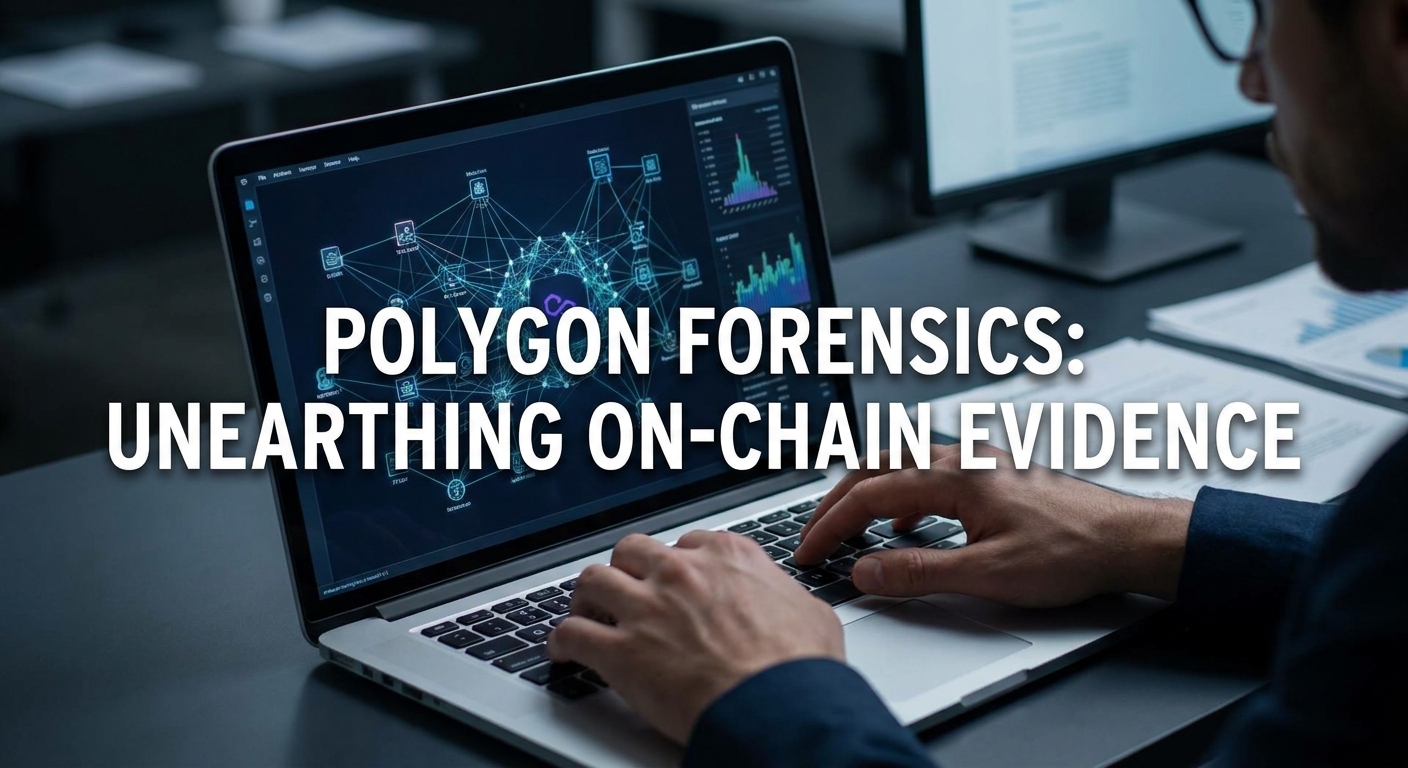
One of the foundational strategies in Polygon forensics is Multi-Layer Transaction Tracing. Unlike a single-chain investigation, funds on Polygon can traverse its primary PoS chain, interact with various Layer 2 solutions, and bridge to other networks. When investigating David's case, the first step would be to pinpoint the exact transaction where the funds left the client's wallet or the compromised protocol. From there, we'd follow the asset's journey hop-by-hop. This involves tracking the initial MATIC or ERC-20 token outflow, identifying subsequent swaps on Polygon DEXs like QuickSwap or SushiSwap, and meticulously mapping the receiving addresses. For example, if the stolen MATIC was swapped for WETH, then bundled with other assets and sent to a new address, each step creates a new data point. The challenge isn't just seeing the transactions but understanding their intent and aggregating them into a coherent flow, which requires tools capable of visualizing these complex paths and identifying clusters of activity.
Another critical strategy involves Smart Contract Interaction Analysis. Many incidents on Polygon involve vulnerabilities or malicious functions within smart contracts. In David's scenario, we'd immediately scrutinize the DeFi protocol's contract address. This means examining the contract's creation transaction, its verified source code (if available on PolygonScan or similar explorers), and most importantly, its internal transactions and event logs. We'd look for unusual function calls, such as an emergencyWithdraw() function being triggered by an unauthorized address, or a mint() function creating tokens out of thin air. For instance, if a newly launched token on Polygon experiences a "rug pull," analysis would reveal a disableTransfers() or drainFunds() function being invoked by the deployer's address shortly after liquidity was added, preventing users from selling and siphoning off the pooled assets. Understanding these contract-level interactions is crucial for establishing the mechanism of the loss.
The third vital strategy focuses on Cross-Chain Bridge Analysis. Scammers often attempt to obscure their tracks by moving funds across different blockchains. Polygon, by design, interacts heavily with Ethereum via its PoS Bridge, but also with other chains through third-party bridges like Synapse or Celer. If the funds from David's client's wallet were traced to an address that subsequently sent them off the Polygon network, our investigation would pivot to identifying the specific bridge used. We'd then trace the deposit event on Polygon and look for the corresponding mint or release event on the destination chain. For example, if stolen WETH is bridged from Polygon to Ethereum, we would then continue the tracing on the Ethereum network, tracking the WETH to potential mixers, centralized exchange deposit addresses, or further obfuscation attempts. This cross-chain perspective is indispensable for building a complete picture of asset movement.
At the heart of all these strategies lies the "Follow the Money" principle, adapted for the blockchain. Every transaction, every token transfer, every smart contract interaction leaves an immutable, transparent record on the Polygon ledger. While addresses are pseudonymous, the interconnectedness of these transactions often reveals patterns, clusters of activity, and ultimately, potential endpoints that can be linked to real-world entities. The digital trail is often far more detailed and persistent than traditional financial records, providing a robust framework for evidence collection.
In practice, imagine Omar, a user whose valuable NFTs were stolen from his Polygon-based OpenSea account. The forensic process would begin by identifying the specific Polygon wallet address that received the stolen NFTs. From there, we'd trace the NFTs themselves, noting if they were immediately listed on another marketplace or transferred to a different wallet. Concurrently, we'd follow the MATIC proceeds from the sale of those NFTs. This might involve tracing the MATIC through several swaps (e.g., MATIC to USDC, then USDC to WETH) across various Polygon DEXs, potentially consolidating funds from multiple small sales into larger amounts. The trail might then lead to a bridge, moving the WETH to the Ethereum mainnet, and finally to a deposit address associated with a known illicit entity or a centralized exchange that might, with appropriate legal process, reveal the perpetrator's identity. This iterative process of following the assets and their proceeds across layers and chains is fundamental.
Unearthing on-chain evidence on Polygon is a meticulous endeavor. It demands a blend of technical expertise, a deep understanding of Polygon’s architecture and ecosystem, and the strategic application of advanced analytical tools. For anyone requiring a definitive understanding of Polygon-based incidents, precision and thoroughness in investigating the digital breadcrumbs are not merely helpful; they are absolutely paramount for reconstructing events and establishing irrefutable facts.