
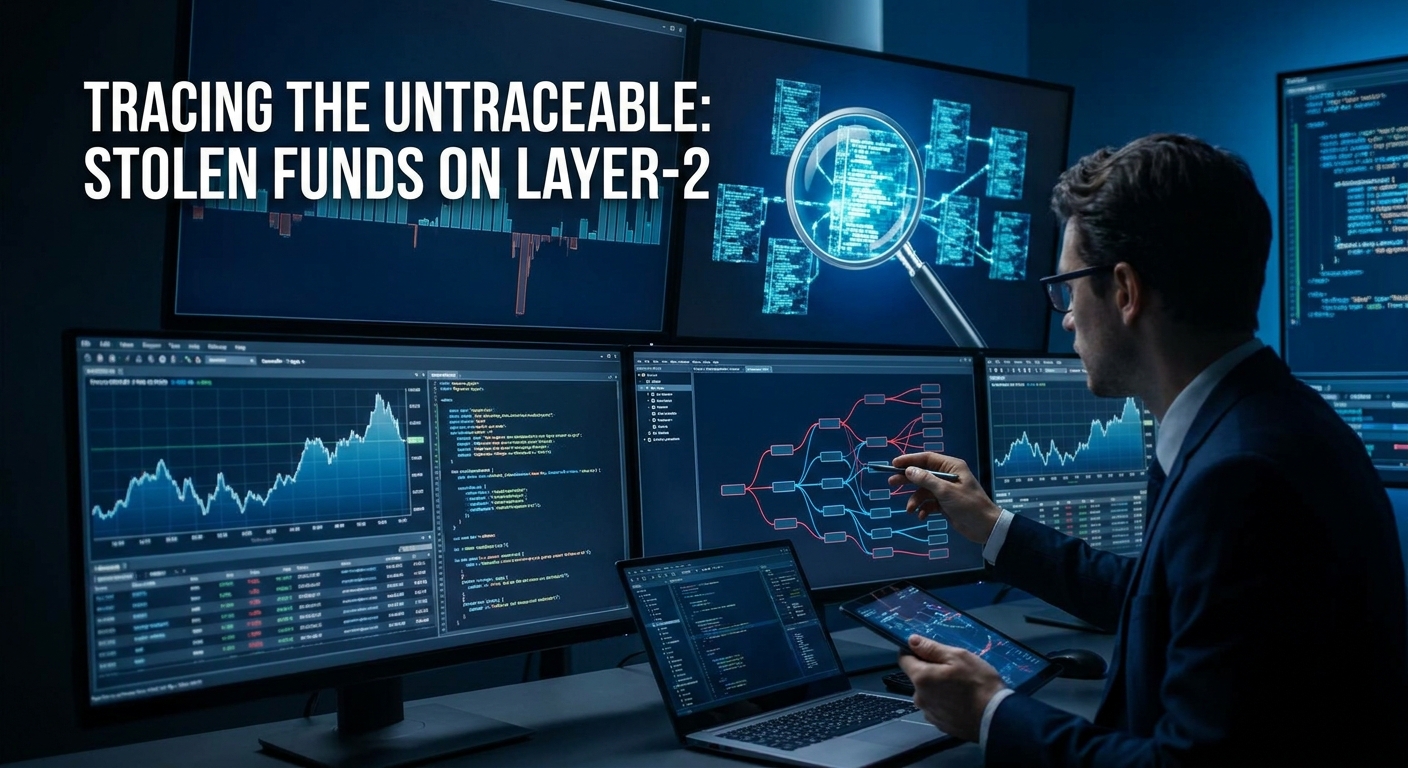
The message from Mr. Peterson was stark: his entire portfolio of stablecoins, meticulously managed for his family’s future, had vanished. One moment, he was checking his balance; the next, an unauthorized transaction had drained his wallet. His initial panic gave way to a chilling realization: the funds hadn’t just moved to another Ethereum address. Instead, the transaction explorer showed them exiting via a bridge contract, disappearing into the labyrinthine world of a Layer-2 network. This scenario, once rare, is becoming increasingly common, presenting a formidable challenge for victims and investigators alike. The perception that funds, once on Layer-2, become "untraceable" is a powerful myth, but it’s one we’re consistently disproving with advanced analytical techniques.
Layer-2 solutions like Arbitrum, Optimism, Polygon, and zkSync are vital for scaling blockchain networks, offering faster transactions and significantly lower fees. However, their architecture introduces complexities for forensic analysis. While Ethereum's mainnet provides a single, albeit vast, ledger, Layer-2s operate with their own distinct transaction histories, state roots, and often, unique bridging mechanisms. This fragmentation means that a simple "follow the money" approach, which works well on a single chain, quickly becomes a multi-chain puzzle. The funds aren't truly untraceable; they've simply moved to a different, less transparent, but still public, neighborhood of the blockchain universe.
Our approach begins with a comprehensive strategy of Cross-Chain Bridge Analysis. The critical choke points for funds moving between a Layer-1 and a Layer-2 are the bridge contracts. When Mr. Peterson's stablecoins left Ethereum, they interacted with a specific bridge. Identifying this initial transaction is paramount. We meticulously analyze the Layer-1 transaction hash, pinpointing the exact bridge contract involved. From there, the task shifts to the corresponding Layer-2. Each bridge has a mechanism for recording deposits and withdrawals on both sides. By querying the specific Layer-2's block explorer and internal data structures, we look for a corresponding deposit event, often with a similar timestamp or a unique identifier linking it back to the Layer-1 transaction. For instance, if funds moved via the Arbitrum Bridge, we’d then dive into the Arbitrum One network's data, searching for the exact moment those stablecoins materialized on the Layer-2, effectively re-establishing the digital chain of custody.
Once the funds are located on the Layer-2 network, the next phase involves Granular Transaction Graph Analysis. While the architecture of a Layer-2 differs from Layer-1, the fundamental principle of immutable, publicly recorded transactions remains. We treat the Layer-2 as its own distinct ecosystem, mapping out the flow of funds from the initial deposit address. This often involves following multiple hops, swaps through decentralized exchanges (DEXs), and transfers to various intermediary wallets. Attackers frequently attempt to obfuscate their tracks by rapidly moving funds between multiple addresses, converting assets (e.g., from stablecoins to ETH, then to another altcoin), or even interacting with liquidity pools. Our software excels at visualizing these complex transaction graphs, identifying patterns that human eyes might miss. We look for common "sink" addresses – wallets that ultimately aggregate funds from various illicit activities, or addresses known to interact with centralized exchanges (CEXs) where funds might be converted to fiat or other untraceable assets.
Finally, we integrate Entity Resolution and Off-Chain Intelligence. Blockchain data, while powerful, rarely tells the whole story. The digital footprints lead to addresses, but these addresses only gain meaning when linked to real-world entities or known illicit actors. This strategy involves clustering addresses that exhibit similar behavioral patterns, suggesting they are controlled by the same entity. We cross-reference these clusters with extensive databases of known scammer addresses, exploit-related wallets, and CEX deposit addresses identified through open-source intelligence (OSINT) and previous investigations. For example, if a specific address on Optimism receives stolen funds and then routinely sends them to a CEX deposit address previously flagged in another unrelated scam, it builds a stronger case for identifying the perpetrator. This combination of on-chain data and off-chain intelligence is crucial for transforming raw transaction data into actionable investigative leads.
At its core, our work is guided by the principle of Digital Chain of Custody. Every transaction, whether on Layer-1 or Layer-2, leaves an immutable, cryptographically secured record. The challenge isn't that the funds disappear; it's that their path becomes fragmented across different ledgers. By meticulously reconstructing each step, from the initial compromise on Layer-1, through the bridge, onto the Layer-2, and subsequent movements within that Layer-2 ecosystem, we establish an unbroken digital chain of custody. This framework allows us to present a comprehensive narrative of the stolen funds' journey, backed by verifiable on-chain evidence.
Just last month, a colleague, Ms. Chen, was working on a case involving a significant theft of Wrapped Ether (wETH) that had disappeared onto Polygon. The initial trace showed the wETH being swapped for MATIC and then entering a large liquidity pool. It looked like a dead end. However, by leveraging our analytical tools to scrutinize the pool's outbound transactions and correlating them with activity on a less-frequented bridge to an emerging zk-Rollup, she identified a series of rapid, high-value transfers. These led directly to a major centralized exchange's deposit address, allowing for a timely freeze request and a significant step towards recovery. This vignette underscores that even highly sophisticated attempts at obfuscation can often be unraveled with the right software and expertise.
For anyone needing to understand the true disposition or potential recoverability of crypto assets, especially after a suspected theft, the actionable takeaway is clear: don't assume untraceability just because funds have moved to a Layer-2. The digital footprints are there, often in intricate detail. Engage with experts who utilize advanced analytical software designed to navigate these complex multi-chain environments. The ability to meticulously connect these digital dots, even across the fragmented landscape of Layer-2s, is often the difference between a complete loss and a path to potential recovery.