
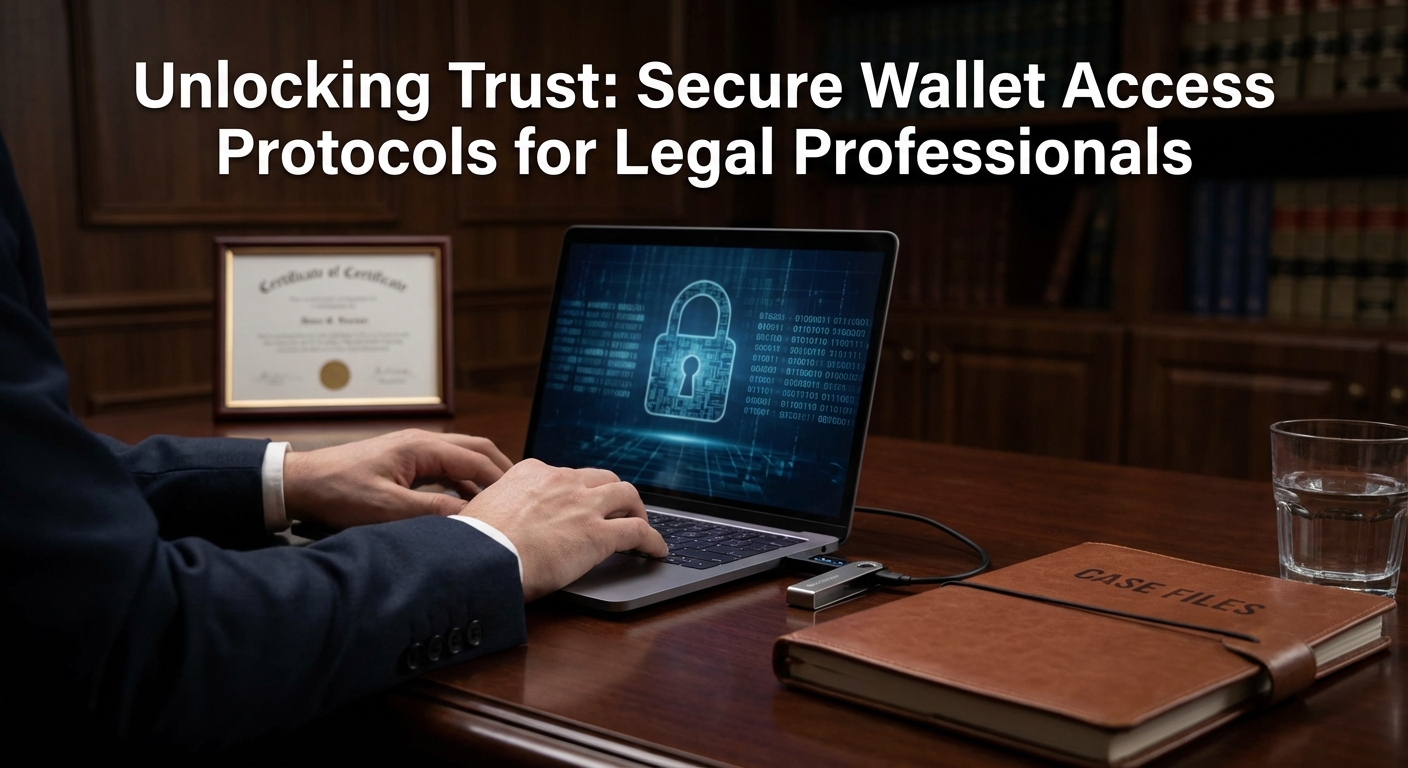
The tension in the conference room was palpable. Attorney Clara Jenkins was representing a client, David, in a complex probate case. David's deceased uncle, Mr. Henderson, was known to be a private man, but whispers of significant cryptocurrency holdings had begun to circulate among the family. The will was clear on traditional assets, but there was no mention of digital wealth. David, as the sole beneficiary, was desperate to locate and secure these potential assets, but all he had were a few cryptic notes and a dusty old laptop. The challenge wasn't just proving the existence of the crypto; it was gaining legitimate, legally sound access to it without compromising its integrity or David’s claim. The clock was ticking, and without a clear protocol, the digital fortune risked being lost to the ether or, worse, falling into the wrong hands.
This scenario isn't unique. As cryptocurrency becomes an increasingly significant part of global wealth, legal professionals frequently find themselves in uncharted territory, grappling with how to identify, access, and secure digital assets for litigation, probate, divorce, or bankruptcy. The very nature of blockchain – decentralized, pseudonymous, and often self-custodial – presents unique hurdles. At Leaguewell.com, we understand these challenges intimately. Our mission is to equip legal teams with the software and expertise to navigate this complex landscape, ensuring trust and integrity in every step of digital asset recovery and appraisal.
One of the most effective ways to "unlock trust" in these situations is through Proactive Digital Asset Discovery and Inventory. This isn't just about reacting to a crisis; it's about embedding crypto considerations into standard client intake and asset management practices. Imagine advising a client like David's uncle, Mr. Henderson, years ago. We would encourage meticulous documentation: not just a list of exchange accounts, but details of hardware wallets (e.g., "Ledger Nano S, serial number XYZ"), seed phrases (stored securely offline and encrypted), public blockchain addresses, and even transaction IDs for significant transfers. For high-net-worth individuals, establishing a multi-signature wallet with trusted designees (e.g., an attorney, an executor, and a financial advisor) ensures that no single point of failure can lock out legitimate access, and it provides a clear succession plan for digital assets. By having clients proactively document their holdings in a legally sound and secure manner, much of the future uncertainty and contention can be mitigated.
Even when proactive measures weren't taken, Leveraging Forensic Blockchain Analysis Tools for Verification and Tracing offers a powerful pathway to evidence. When direct wallet access is impossible or disputed, the public ledger itself becomes an invaluable source of truth. Consider the case of a business dispute where one partner, say, Robert, claims he sent funds to a specific vendor, but the vendor, Ms. Schmidt, denies receipt. Using Leaguewell's platform, Clara’s team could input Robert's known wallet addresses or even transaction hashes. Our software would then visualize the flow of funds, showing if the transaction indeed occurred, where the funds went, and whether they ultimately reached Ms. Schmidt's identified addresses or were diverted elsewhere. This isn't mere speculation; it's an evidence-based approach that provides irrefutable on-chain data. We can trace transactions across multiple blockchains, identify linked addresses through clustering analysis, and even flag suspicious patterns indicative of obfuscation or illicit activity. This level of detail provides objective proof, often compelling parties to disclose or acknowledge assets they previously denied.
Crucial to the integrity of any digital asset investigation is adhering to a rigorous Chain of Custody framework. In the digital realm, this means meticulously documenting every step from initial discovery to final disposition. If Clara’s team identifies a suspicious transaction, they must record the exact blockchain address, the transaction ID, the timestamp, and the method used to retrieve this information (e.g., screenshot from Leaguewell’s platform with hash verification). If a hardware wallet is seized, its physical state, serial number, and a cryptographic hash of its contents (if applicable and safely extractable) must be recorded immediately. Any transfer of evidence, whether physical or digital, requires a clear log, noting who had access, when, and for what purpose. This meticulous documentation ensures that the digital evidence collected is admissible in court, standing up to scrutiny against claims of tampering or misrepresentation.
Finally, when direct access to a wallet is mandated or required for appraisal, implementing Secure, Multi-Party Access Protocols becomes paramount. Imagine a court order compelling Mr. Henderson’s family to provide access to a discovered hardware wallet. Instead of simply handing over a seed phrase, a protocol could be established where a neutral forensic expert, perhaps from Leaguewell, is appointed to oversee the access. This expert would operate in a controlled environment, documenting every input and output, and using specialized software to ensure the integrity of the process. For instance, if funds need to be moved to an escrow account for valuation, a multi-signature transaction could be set up requiring authorizations from the expert, the opposing counsel, and a court representative. This approach minimizes the risk of unauthorized transfers, prevents accusations of evidence tampering, and ensures that all actions are transparent, auditable, and legally defensible.
In practice, we recently assisted Attorney Eleanor Vance in a complex corporate fraud case. Her client, Marcus, suspected his business partner, Julian, of siphoning off company funds into various DeFi protocols. Julian vehemently denied the allegations, claiming he had no knowledge of such transactions and that any crypto he owned was personal. Eleanor's team, utilizing Leaguewell's forensic tools, was able to identify a series of large, unexplained transfers from the company's operational accounts to a specific centralized exchange account linked to Julian. From there, we traced the funds through several intermediary wallets to a complex web of DeFi smart contracts. While direct access to Julian's personal crypto wallets remained elusive, the undeniable on-chain evidence of funds originating from company accounts and flowing into Julian-controlled addresses, coupled with transaction patterns suggesting attempts at obfuscation, presented a compelling case. This detailed forensic report ultimately led to a favorable settlement for Marcus, avoiding a protracted and costly trial.
The world of digital assets demands a proactive, informed, and secure approach from legal professionals. For those needing appraisals or needing to establish ownership and value of digital assets, the first critical step is to secure access or to gather irrefutable on-chain evidence. Integrate digital asset discovery into your standard procedures, partner with forensic blockchain experts early, and proactively educate your clients on secure digital asset management. Consulting with Leaguewell.com provides you with the necessary tools and expertise to navigate these complex waters, transforming uncertainty into actionable intelligence and ensuring trust in the digital age.